


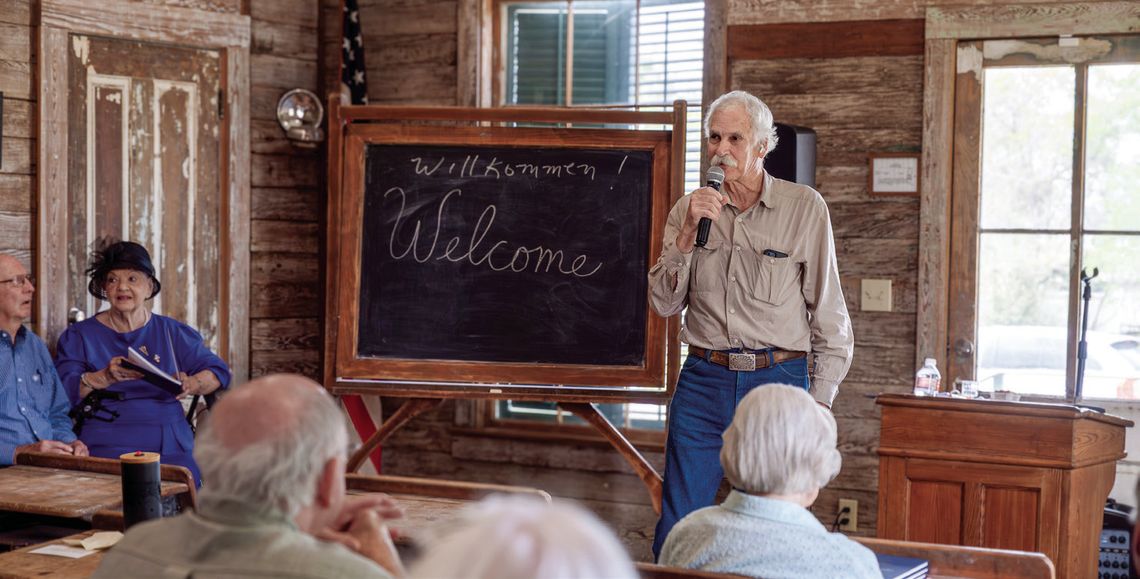
The Kaffeeklatsche—a charming German term that evokes the warmth of social gatherings over coffee and conversation— provided the perfect backdrop for the highly anticipated release of “History of De-Witt County 1899,” a book originally written in German by immigrant C.H. Waltersdorf.
Dr. James C. Kearney, a renowned historian, author, and professor of Germanic Studies at the University of Texas, translated the book and talked about its significance.
“I recognized immediately that this is a very interesting document, not only because it tells the story of common people,” Kearney said, “but extraordinary common people -- the kind of people that most histories tend to neglect.”
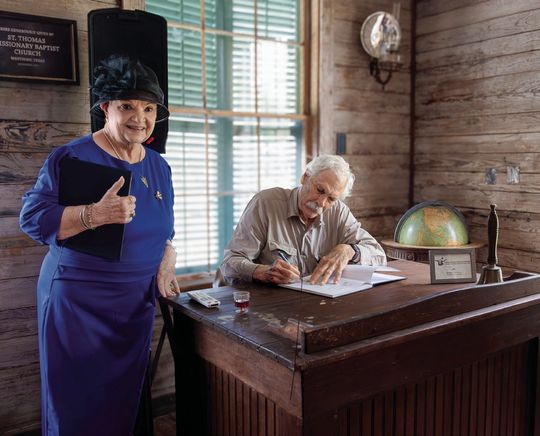
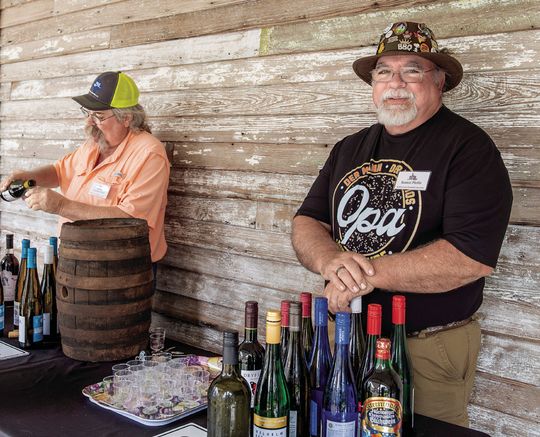
The Kaffeeklatsche was held in the cozy confines of the English German School at the Chisholm Trail Museum on a Sunday, March 23. Attendees indulged in a delightful array of German-themed snacks, including Mary Gayle Brindley’s renowned homemade venison sausage and an assortment of fine German wines. The air was filled with chatter as descendants of late 19th-century German immigrants gathered, eagerly awaiting Dr.Kearney's insightful lecture on the rich tapestry of German heritage woven throughout De-Witt County and other regions of Texas.
Above, the ceiling fans lazily turned, adding to the ambiance. As guests settled into the sturdy wooden school desks, the atmosphere transformed. The silver- haired audience became youthful schoolboys and schoolgirls again.
Peggy Ledbetter, president of the De-Witt County Historical Commission, recounted the discovery of Waltersdorf’s book, which was found by Yorktown resident Beverly Brun among her grandmother’s belongings in the attic in 2020.
This prompted the historical commission to establish a dedicated committee, chaired by Mary Gayle Brindley, and composed of Beverly Brun, Peggy Ledbetter, and Glenn Rea, to embark on the important task of translating the historical text.
“Four years ago, we celebrated the DeWitt County Historical Commission’s 175th anniversary. Today, we gather to mark the culmination of that effort. While the journey was long, every moment was well worth it,” Ledbetter announced proudly, revealing that the book would be available for purchase at the price of $20.
Dr. Kearney took on the essential task of translating the book. The translation process was meticulous and collaborative, involving extensive annotation and discussions with local historians to ensure that the document received the historical recognition it so rightly deserved.
“Focusing on the German immigrant community, 'History of De-Witt County 1899' was a supplement to the German language newspaper in neighboring Lavaca County, the Lavaca County Nachrichten,” Dr. Kearney said.
The book is brimming with anecdotes of everyday life in DeWitt County from the 1880s to 1892. He previewed a charming story about a woman who ran a boarding house. ’’Mainly for Germans, but also for the ox trains and wagons that ran between Indianola and San Antonio,” he recounted.
You often hear about the local Sutton-Taylor feud and John Wesley Hardin, the notorious gunfighter associated with DeWitt County, but few have written about the immigrant community’s perspective on those current events in the 1880s.
Kearney emphasizes that this is the first document narrating the feud from the German perspective, which makes it particularly interesting to a broader audience. Dr. Kearney encouraged attendees to purchase the book to learn more about Carl Waltersdorf, Rudolph Kleberg’s contributions to DeWitt County and the Texas Legislature, the preservation of the Alamo, the Ku Klux Klan, and the unique partnership between Anglos and Germans in DeWitt County.
In the Q & A portion that followed, past and present voices echoed in the room as people inquired about their relatives.
Dr. Kearney was well-received, as demonstrated by book purchasers lining up to receive his autograph.