


News-ViewOpinion
“Gentlemen, you will permit me to put on my spectacles, for I have not only grown gray but almost blind in the service of my country.”
When you read this, do you envision an aging humble man addressing a room?
If so, you are correct. This man led citizens and soldiers to challenge the tyrannical British monarchy. This statesman later gave up power and, the opportunity to lead this new great experiment, called the United States of America, indefinitely.
This man was General and President George Washington.
The year was 1783, the war was over, but peace was not guaranteed. The soldiers of the Continental Army had not been paid. Congress was broke. Some officers were bitter and felt betrayed. They began to whisper about a military coup, an armed march against Congress to demand justice. This great new experiment was on the edge of becoming just another revolution that ended in a military dictatorship.
Until Washington walked into the room.
He was not invited, nor did he bark orders and show aggression. He spoke calmly, urging his men to remain loyal to the ideals they fought for: a country governed by the people, not by generals or monarch.
This event is known as the Newburgh Address.
The humility, the vulnerability displayed by a hardened warrior for liberty and self-determination caused the room to fall silent. Some cried. As a result, the conspiracy ended.
Washington had a high level of emotional intelligence (EQ) before the catchy concept was popular. He did not win by force as on the battlefield. He won by example.
Now, nearly 250 years later, we see similar sentiments, not in military ranks, but amongst the people. Our Republic is inherently fragile. Like a spider’s web: delicate and easily disturbed, yet remarkably strong and resilient when anchored at key points. Those key anchors are the leaders in government, and we the people.
Washington understood the hardest part of a revolution is not winning the war, it is living up to the ideals that inspired it. This is precisely why he gave up power. That is why he walked into that room in 1783. He saw cracks forming in the foundation of liberty and chose to patch them with humility, not force.
What would Washington do now?
He would remind us who we are, and what we owe each other, not as partisans, but as Americans. He would put country above ego. It is about speaking to our better angels, not our darkest fears.
Today, Congress is broken and fragmented. Washington would not excuse their failures, but he would not tear down the system either. He believed it could be repaired from within. He knew the American experiment, messy, flawed, and fragile was still worth preserving.
That’s the leadership we need today.
We need leaders who don’t exploit division for gain, but heal it with principles. Leaders who understand power is earned through sacrifi ce. Leaders who see restraint not as weakness, but as the foundation of liberty.
Each July 4th, we wave flags, watch fireworks, and sing patriotic songs. But perhaps, we should also put on our own “spectacles” – to see clearly what is required to keep this Republic strong.
Just as Washington steadied a fragile moment in our early days, we too must anchor ourselves, in truth, civility, and our shared responsibility to preserve the promise of America. Not with bitterness or violence, but with clarity and courage.
This July 4th, enjoy the fireworks, but let us also honor the silence in that room in 1783, when one man’s quiet leadership saved a fragile nation. Let that silence echo in our hearts, calling us to serve, protect, and build upon the Republic we inherited.
Let Washington’s humility and vulnerability inspire us to reach across political divides. Open our hearts to understand why others may see things differently, and accept that, on most issues, we likely share more common ground than we think.
In a time of intense polarization, choosing empathy is an act of patriotism.
Love one another. That is how we honor the promise of America.
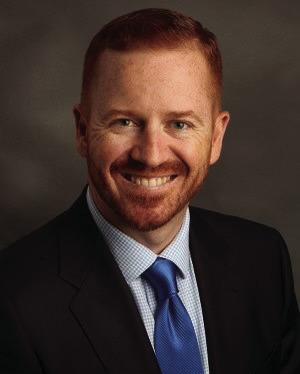
Joe Olive is a 10-year Air Force veteran who currently works as a Financial Advisor for the Sather Financial Group, a fee-only strategic planning and investment management firm. He holds a master’s degree from Columbia University.