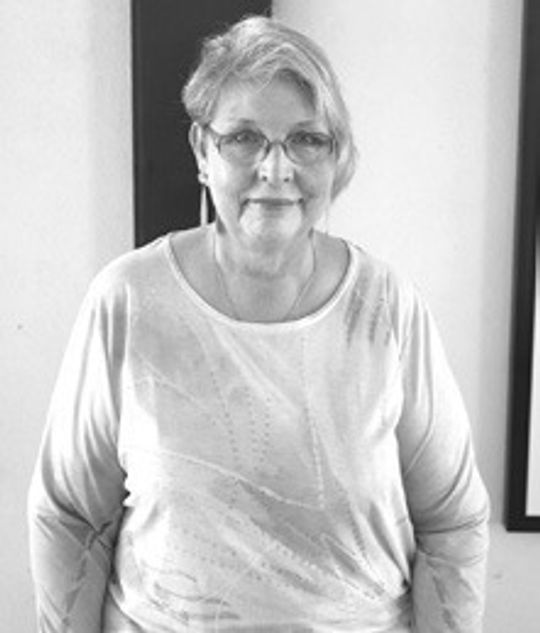



I came from a family of preachers and teachers, so it was a tad rebellious of me to start my worklife in journalism. First at the Victoria TV station in the 1980s, then later at The Victoria Advocate. But one spring day in 2001, a high school student job shadowed me at the paper.
Sitting side by side in front of the computer and designing the entertainment section, she wistfully longed for a journalism teacher to help with her publications. All my latent educator genes kicked in.
I signed up for the Alternative Teacher Certification at Region 3, and by the fall of that year, I was teaching 7th grade English. Somehow I survived and eventually got to a school where I taught journalism as well as English. (Tip to principals: wherever you have a teacher shortage, send students to job shadow people in a related industry. Devious, but effective!)
All this is to say that for two plus decades as a teacher, this time of year has meant massive preparation of classrooms and lessons. Most of all, it's the anticipation of connecting with young people, the students. Who are they? Who will they be when they mature more? And how can I best help them?
Now that I’m back to straight up journalism, it’s the first fall (except for 2020) that I don’t have a teaching post, and it’s strange. Something is missing.
But I have found echoes of my former career everywhere I go in DeWitt County. From school board meetings, to fabulous young people, to supportive parents, to the amazing retired teachers out there volunteering, school actually is, everywhere.
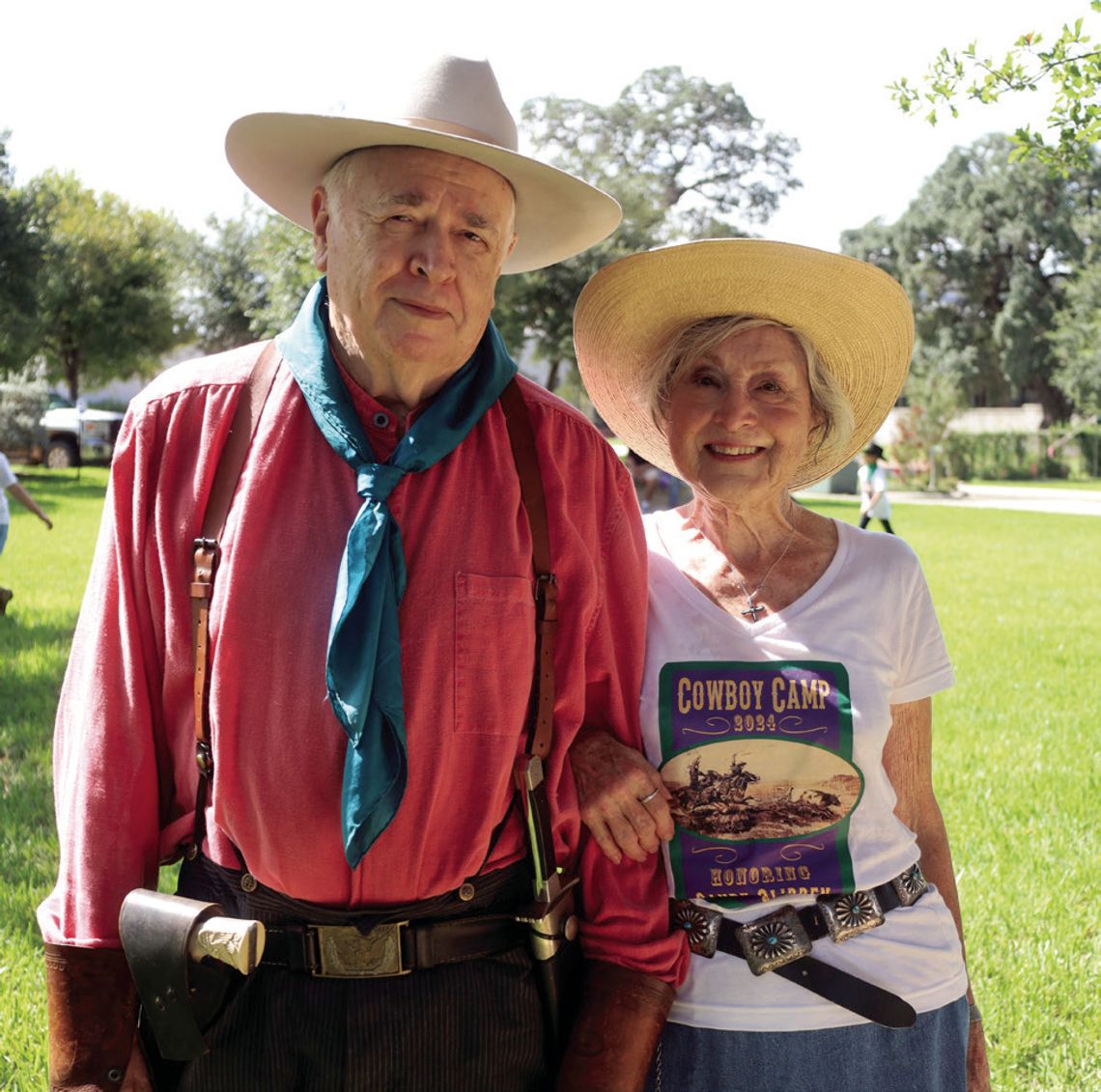
One astounding example of this is Candy Glidden and Cowboy Camp. For the past 14 years, the retired teacher, along with her husband, Dan, and son, Travis, have or-ganized Cowboy Camp, a program of the Chisholm Trail Heritage Museum. In fact, Cowboy Camp preceded the museum opening and laid the foundation for its mission of preserving local ranching history.
Candy said the youth are hungry for the handson learning of Cowboy Camp, which is evident with the return campers who age out then become councilors. From horse etiquette to roping to branding, to biscuit making, and everything between, something new can be learned every year.
It’s one thing to read a description of Cowboy Camp, but it’s quite another to witness it. The campers are divided into small groups and hang out under the oaks on the back lawn of the museum, waiting their turn at the activity for that “station.” One might be sitting on Tex the Longhorn and hearing about his wild-roaming forebears, another could be a horse ride with a volunteer describing trail life, anothsicians er could be snack time at the cook wagon.
A calm, unhurried atmosphere pervades the gathering that harkens back to pre-electronic, pre-technology days. But the procedure of moving from activity station to activity station reinforces modern classroom learning stations. Many of the adult volunteers are also retired teachers who positively glow as they interact with the children.
Then there’s the camp handbook that has age-appropriate activities and games as well as the all-important campfire songs. But it also has some real meat about cowboy culture, so the older campers can learn even more. Most notable is the “Code of the West,” a frontier guide to conduct that is still relevant: 1. Live each day with courage.
2. Take pride in your work.
3. Always finish what you start.
4. Do what has to be done.
5. Be tough, but fair. 6. When you make a promise, keep it.
7. Ride for the brand. 8. Talk less, and say more.
9. Remember that some things aren’t for sale.
10. Know where to draw the line.
Reinforcing this code each year and the enthusiastic community support for Cowboy Camp may well explain some of the amazing achievements of local youth. For example, this spring the ag students at the Cuero Livestock Show donated $87,000 from their livestock sales toward the Ag Friar building, definitely riding for the brand.
Now an octogenarian, Candy keeps threatening to step back from the camp. But her beaming face on Native American dance day as she stepped in rhythm with campers around the pow-wow drums belies that assertion. This is her happy place, with kids, learning by doing, the cowboy way.
Neigh, Miss Candy, you’re gonna need a bigger camp.