


MARGE K ACIR Contributed Article
The Victoria-Crossroads Chapter of the Independent Cattlemen’s Association held its monthly meeting in Goliad on Aug. 14 with a presentation informing ranchers about the threat of screwworm infestation returning to Texas.
Victoria-Crossroads ICA serves Victoria, Calhoun, DeWitt, Goliad, Jackson, Lavaca, Matagorda, and Refugio Counties. About 50 people attended the meeting, including four from De-Witt County: Erna Lee, Ted, and Sandra Simon and Marilyn Powell.
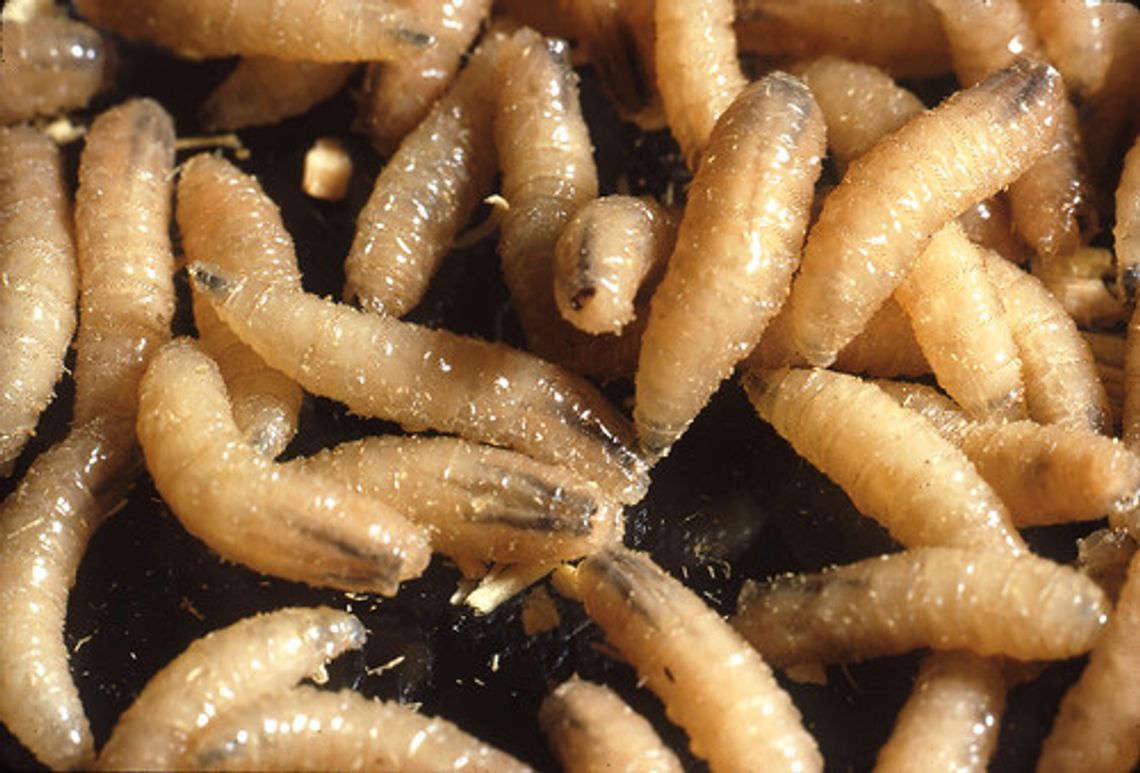
Screwworms are the larvae of New World Screwworm (NWS) flies. They eat into the flesh of warm-blooded animals causing infection that can lead to death if not treated. Many local ranchers remember when screwworms caused significant damage to their herds in the 1950s and 1960s, requiring time-consuming inspection and management and resulting in the loss of many animals. Screwworm flies lay eggs in open wounds or mucous membranes of warm-blooded animals, producing larvae (maggots) that burrow in to feed on the flesh. In addition to cattle, screwworms attack other domestic animals, pets, wildlife, and occasionally birds.
Cooper Little, executive director of the Independent Cattlemen’s Association of Texas, said at the meeting in Goliad, “The only proven way to eradicate screwworms is sterile fly production.”
According to a USDA website, the sterile fly program was developed in the 1950s. Sterile male flies are produced and released to mate with wild female flies. The females lay unfertilized eggs which do not hatch into larvae. “The release of sterile flies is safe, environmentally friendly, and offers a sustainable, non-toxic alternative to chemical pesticides. It poses no risk to wildlife, livestock, or people in infested areas.” Screwworms were considered eradicated in the United States in 1966, in Mexico in the 1980s, and in Central America in the 1990s.
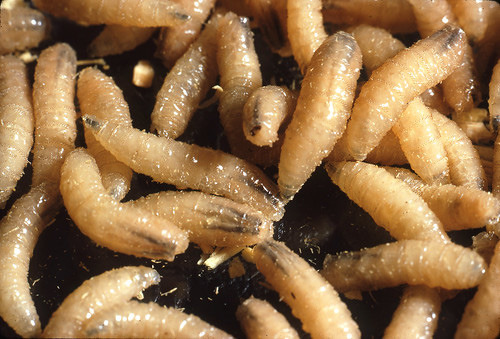
An infestation of screwworms could return to Texas, according to the Victoria-Crossroads Chapter of the Independent Cattleman’s Association. The group advised South Central Texas of the danger at an August meeting. Photo courtesy of USDA
While screwworms have not yet been identified in Texas this year, they have moved north of Panama and are within 370 miles of the Texas/Mexico border. According to a press release from the USDA on August 15, Secretary of Agriculture Brooke Rollins, a Texas native, announced plans to build a sterile fly production facility at Moore Air Force Base near Edinburg. It will work with facilities in Mexico and Panama but seeks to end U S reliance on foreign facilities for sterile fly production. USDA Animal and Plant Health Inspection Service (APHIS) is working to enhance U S oversight and surveillance and monitoring and locking down animal movement across the border.
NWS were first described by a French entomologist in 1858. They are found only in the Western Hemisphere, hence the name “New World” Screwworms. The flies are somewhat bigger than a common housefly. They have metallic blue or green bodies with three dark stripes along their backs and have large orange eyes. Should the flies arrive in Texas, ranchers should report their presence to the Texas Animal Health Commission (800-5508242).