

Hope found in sterile male fly breeding program
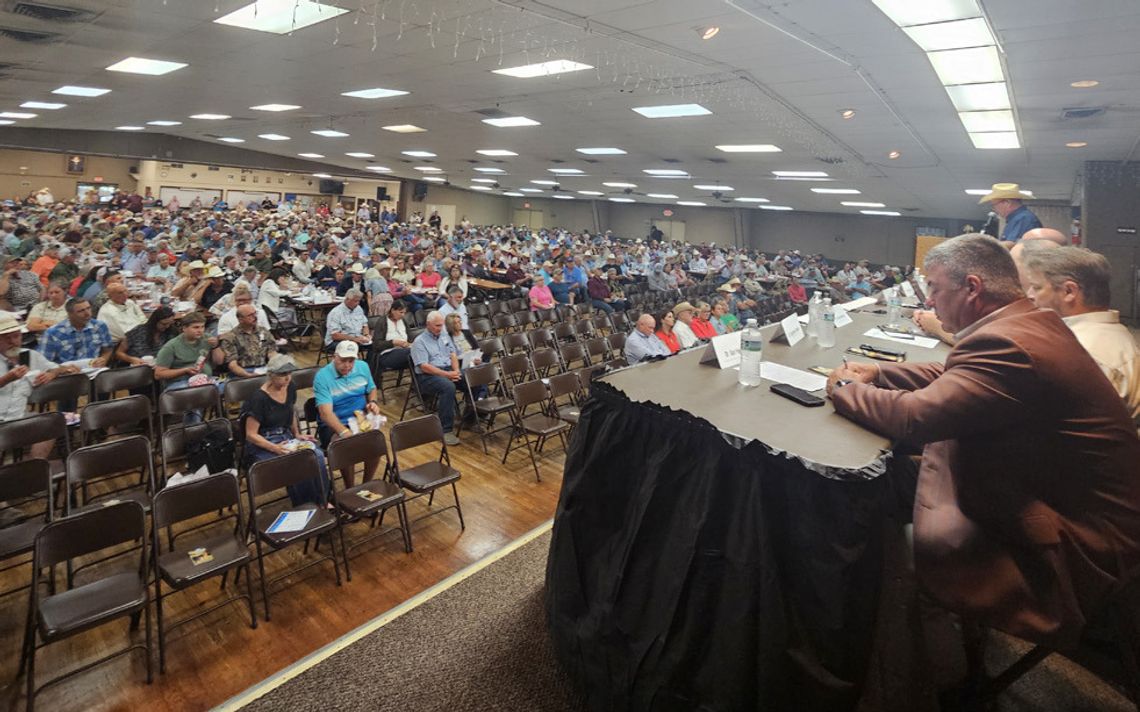
More than 1,200 cattle producers from across South Texas, including many from the Crossroads region, gathered Wednesday at Hallettsville's KC Hall for the latest update on the growing New World screwworm situation.
The event, sponsored by the Hallettsville Livestock Commission, Texas and Southwestern Cattle Raisers Association and Texas Farm Bureau, drew ranchers from as far as four hours away. They heard from cattle industry leaders and state and federal officials leading the fight against the parasitic pest's spread across the Lone Star State.
DeWitt County remains free of confirmed New World screwworm cases, but producers are closely monitoring the pest's spread as additional infestations continue to be confirmed elsewhere in Texas.
Presenters said the five counties surrounding Hallettsville contain the nation's largest concentration of cattle. While the region remains screwworm-free, cattle producers are no doubt concerned by the growing number of cases appearing across Texas.
The number of confirmed Texas screwworm cases had climbed to 20 as of Thursday afternoon, when this story was written, most involving young or newborn calves south and west of San Antonio in Crockett, Edwards, Gillespie, La Salle, Medina, Terrell, Tom Green and Zavala counties. The state's first confirmed case was reported June 3 in Zavala County.
Heavy hitters Hallettsville attracted some true heavy hitters in the battle against the screwworm fly. Among them were Texas and Southwestern Cattle Raisers Association President Stephen Diebel, a Victoria-area rancher and president of the nation's oldest and largest cattle association; Texas Farm Bureau Vice President Warren Cude, a Fort Stockton-area rancher; senior adviser to President Donald Trump John Bellinger, a retired Texas A&M regent who was called back into service when USDA began its screwworm fight in 2022; and Dr. Bud Dinges, state veterinarian and executive director of the Texas Animal Health Commission, along with several local and regional veterinarians and extension specialists.
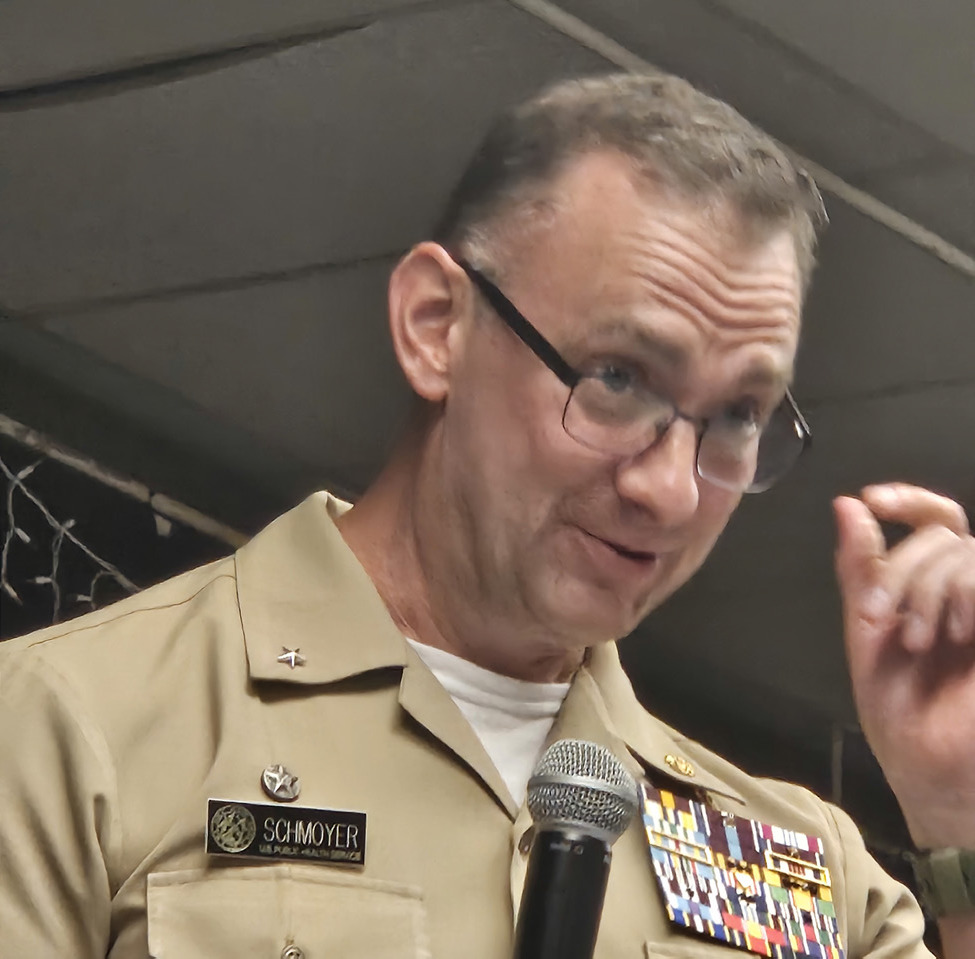
But far and away the most informative presenter was Gen. Michael Schmoyer, who serves as director of operations with the New World Screwworm Directorate of the U.S. Department of Agriculture's Animal and Plant Health Inspection Service, or APHIS.
Schmoyer bears an impressive resume, not only in the current screwworm battle but also on the world stage, having managed ground operations to contain Ebola outbreaks in other parts of the world.
He not only heads the boots-on-theground battle against the screwworm fly here in Texas, he's also overseeing construction of the new USDA laboratory being built at Moore Air Field in Edinburg.
Once completed, it will increase U.S. sterile fly production capacity from its current level of 100 million flies per week to more than 500 million flies each week, more than enough to help eradicate the pest from North America once again.
'We know that sterilized flies work, and we're doing everything in our power to ensure we get as many as we can where we need them most,' Schmoyer said.
Fighting flies with flies The New World screwworm fly (NWS) was effectively eradicated from the United States during the late 1960s and, despite a few resurgences during the 1970s, has largely been held at bay south of Panama for decades, thanks largely to the USDA fly lab in Panama, established during those initial eradication efforts.
That facility — set in the mountainous jungles of Panama, which at its narrowest spans just 37 miles between the Atlantic and Pacific oceans (the distance from Edna to Hallettsville is about 45 miles) — produces 100 million sterile flies each week. Those flies are released into the atmosphere to mate with naturally occurring female NWS flies, interrupting the insect's reproductive cycle.
When the fly broke the Panama barrier in 2022, USDA laid plans for the new Edinburg facility to expand production of sterile flies, something officials anticipated would be needed when the flies eventually reached Texas.
All the models said that would happen during the summer of 2025, but Schmoyer and others, working closely with animal health officials in Mexico, helped delay that first Texas case by a full year. He and others attended the grand opening of a new fly lab in Mexico earlier that week.
Schmoyer said Wednesday the new Edinburg laboratory would now be operational by April 2027, a full five months ahead of its original target date of September 2027, news that nearly landed him an ovation from the ranchers gathered in Hallettsville.
He also discussed the recently developed Nova Fly Project, which is currently being tested at the Panama facility.
The Nova Fly Project, in effect, doubles fly production capacity.
For years, sterile fly production could not separate male flies from female flies. The males are needed to mate with naturally occurring females, which lay the eggs that become flesh-eating larvae. Female screwworm flies mate only once during their lifespan, so releasing a healthy supply of sterile males wherever the flies appear can effectively interrupt the reproductive cycle.
The Nova Fly Project produces only male flies. Researchers are now testing what those changes mean to fly populations in Panama. Schmoyer said they were just weeks away from launching those technologies here in Texas.
They're also using artificial intelligence in a big way, he said, incorporating factors such as wind speed and direction, precipitation, natural barriers and other environmental data to better pinpoint fly releases and give the program its best chance for success.
Dinges said training programs are underway to increase the number of New World screwworm inspectors available statewide as new cases continue to appear across Texas.
'The best thing that you, the producer, can put on your animals is a pair of eyes,' Dinges said.
Diebel reminded producers that the nation's food supply remains safe despite the recent detections.
'It's a pest problem, one that we've beat before and will beat again,' Diebel said. 'The only way we do that is by staying vigilant and being good neighbors. If you see something, say something.'
Reese Hagan, one of the owners of the Hallettsville Livestock Commission and host of the meeting, encouraged producers to take simple preventive measures, including repairing fences and barns to eliminate sharp objects that could wound livestock and establishing relationships with local veterinarians before screwworms reach their area.
'These flies are attracted to open wounds, so it might be a good time to knock in some of those loose nails out at the barn and check your pens for any stray wires that might poke them when you go to load them up,' Hagan said. 'Every little bit helps. And if you don't have a relationship with your local vet or vets, now's a fine time to set that up. You sure don't want to wait until the screwworm fly does show up and try then.'
In the meantime, officials urged producers and the public to trust the battle plans already in place and the public information that has already been released, rather than giving credence to fear-mongering circulating on some social media sites.
There is no need to panic, officials said, but there is a need for vigilance.